How it works
Gas-phase chemistry, operator-defined, revenue recovery system.
Live Fresh isn’t a fragrance overlay. It’s chlorine dioxide distributed through the space, sized to the asset, run by an operator following a written protocol with a documented re-entry step that increases bottom line revenue.
Phase
Gas
Volume
Variable
Dwell
Protocol-defined
Re-entry
Documented
The mechanism
Surface cleaning handles what’s visible. Odor lives where wipes can’t reach.
Odor compounds bind to headliner fabric, seat foam, vent recesses, carpet padding, and trim. A gas distributes through the cabin and contacts those porous substrates the way liquids and shampoos can’t. Once contacted, the compound is oxidized at the source instead of covered with a fragrance note that re-blooms when the perfume dissipates.
01
Spec
Porous penetration
Reaches headliner fabric, vent recesses, carpet padding, and seat foam in a sealed cabin volume.
02
Spec
No fragrance payload
Odor is neutralized at the source. No perfume layer added. Neutral cabin once ventilated.
03
Spec
Operator-defined dwell
Cabin volume, kit size, and dwell time are matched per protocol — not guessed by the team in the bay.
The five-step protocol
A workflow your team runs the same way every time.
Built for an operator with a kit, a sealed cabin or room, and a timer. The same five steps whether it’s a recon bay, a rental turnover, or a hotel suite. Land, Sea and Air, Live Fresh has your assets covered to maximize the entire revenue cycle.
Step 01 · Inspect
Identify the incident before any treatment.
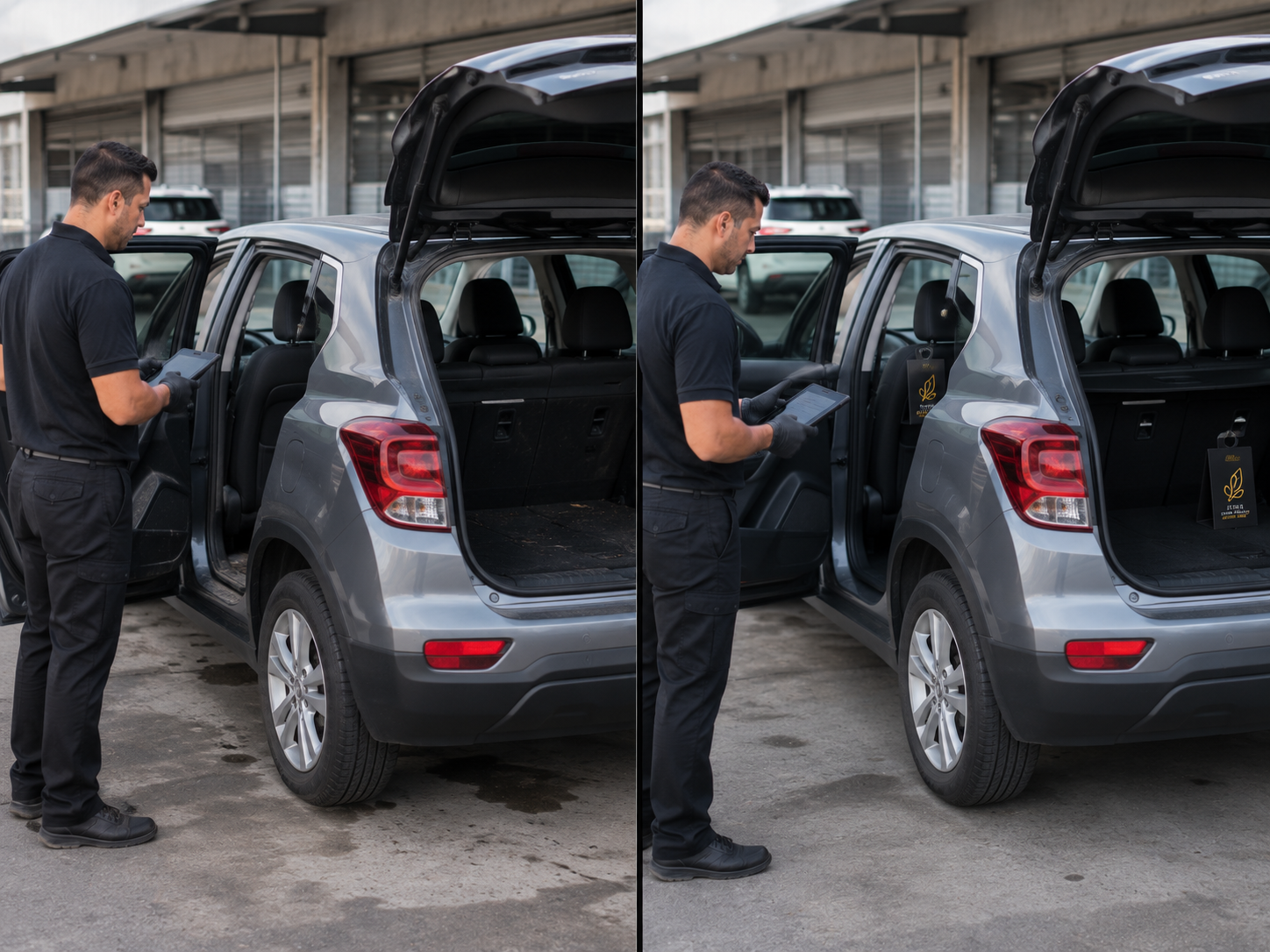
Walk the asset. Flag odor zones, the substrate they live in, and the recovery window you have.
Step 02 · Prep
Choose the right product volume for the space & odor.
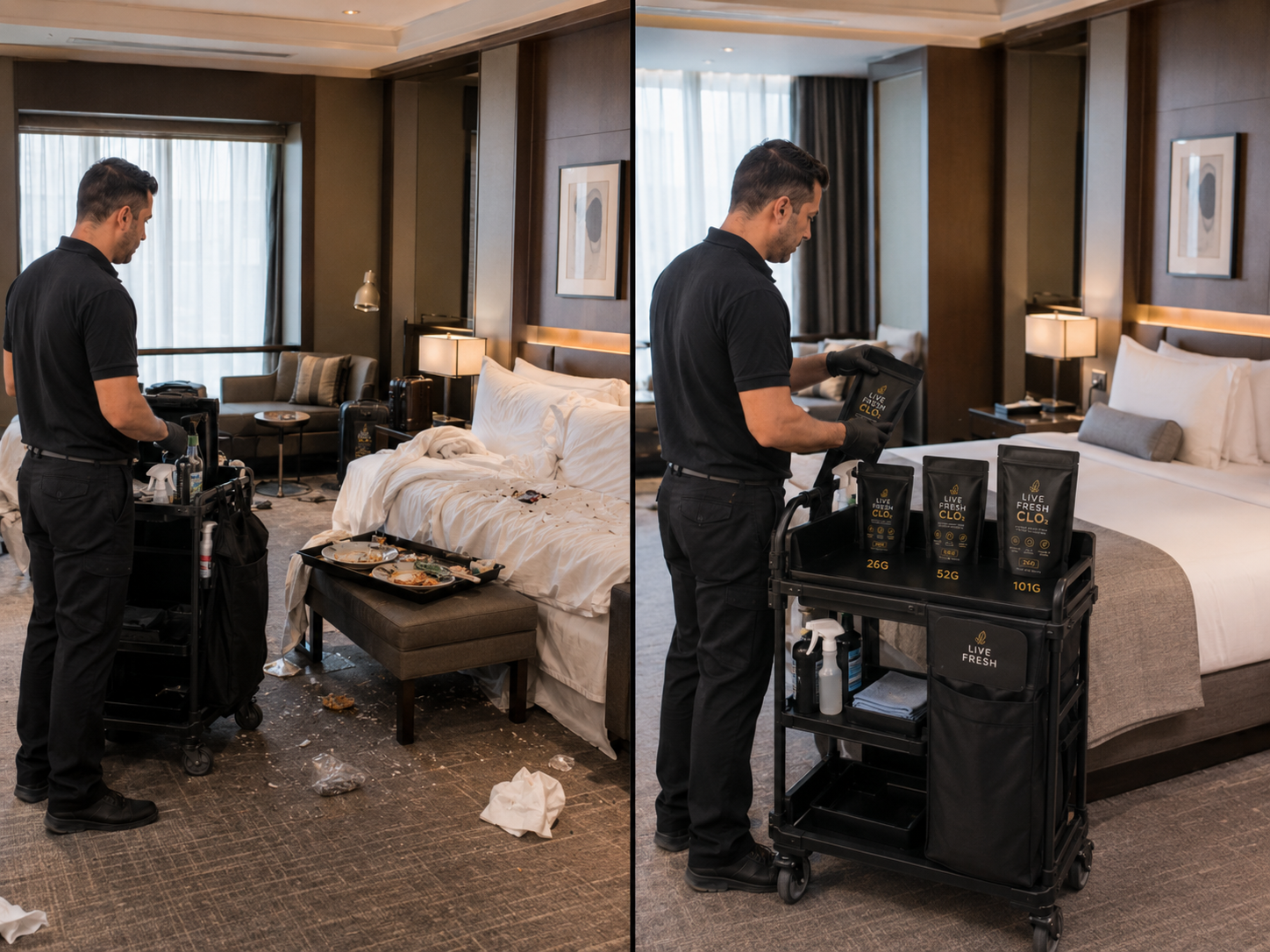
Clear debris, set system to recirculate, position the kit. Predictable conditions, predictable outcome.
Step 03 · Treat
Seal the cabin and run the documented protocol.
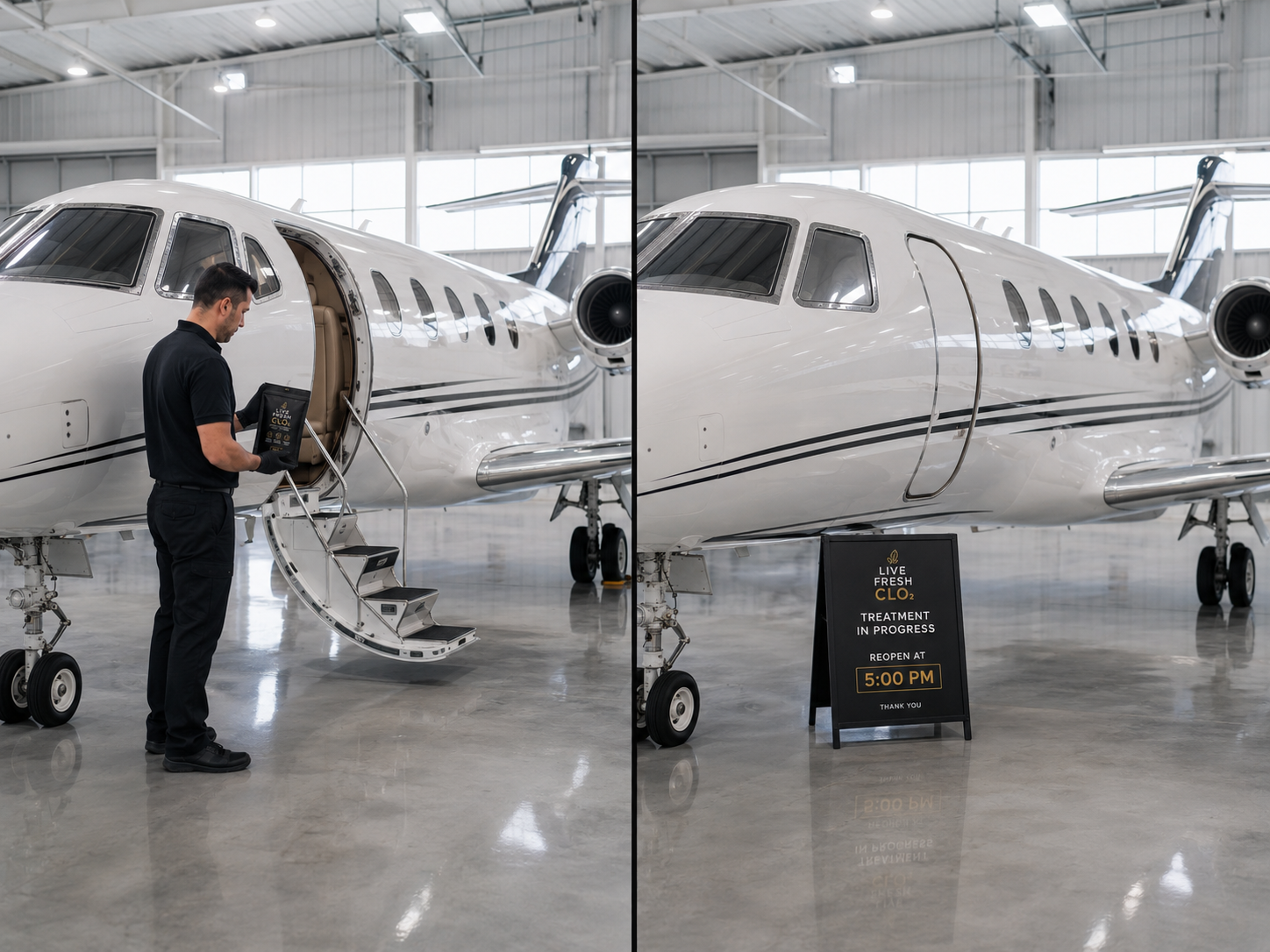
CLO₂ distributes through the cabin space and contacts the porous substrates wipes can't reach.
Step 04 · Ventilate
Ventilate as directed before re-entry.
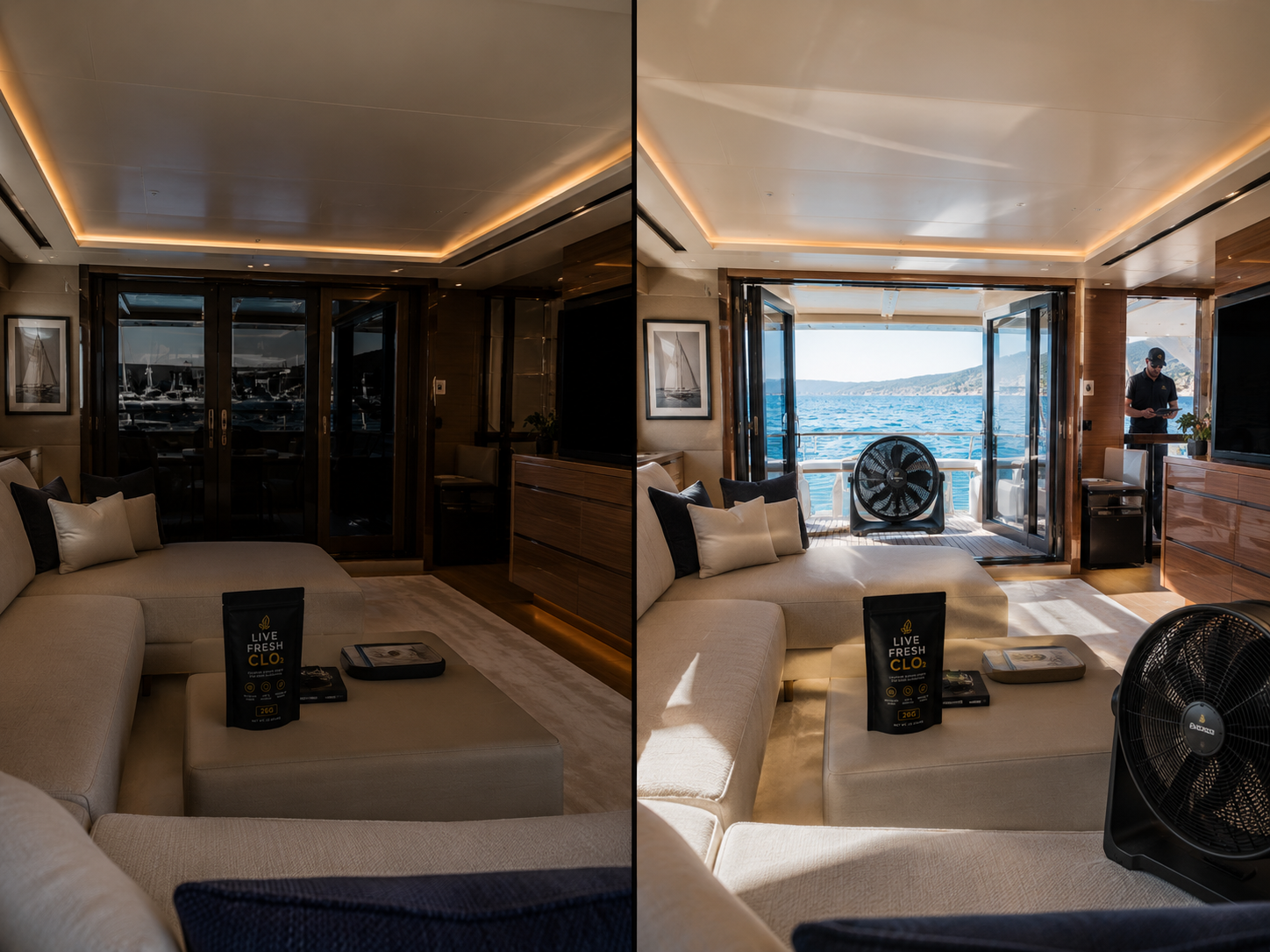
Required, not optional. Air exchange is crucial — the difference between a finished asset and a half-done one.
Step 05 · Verify
Re-check, document, release.
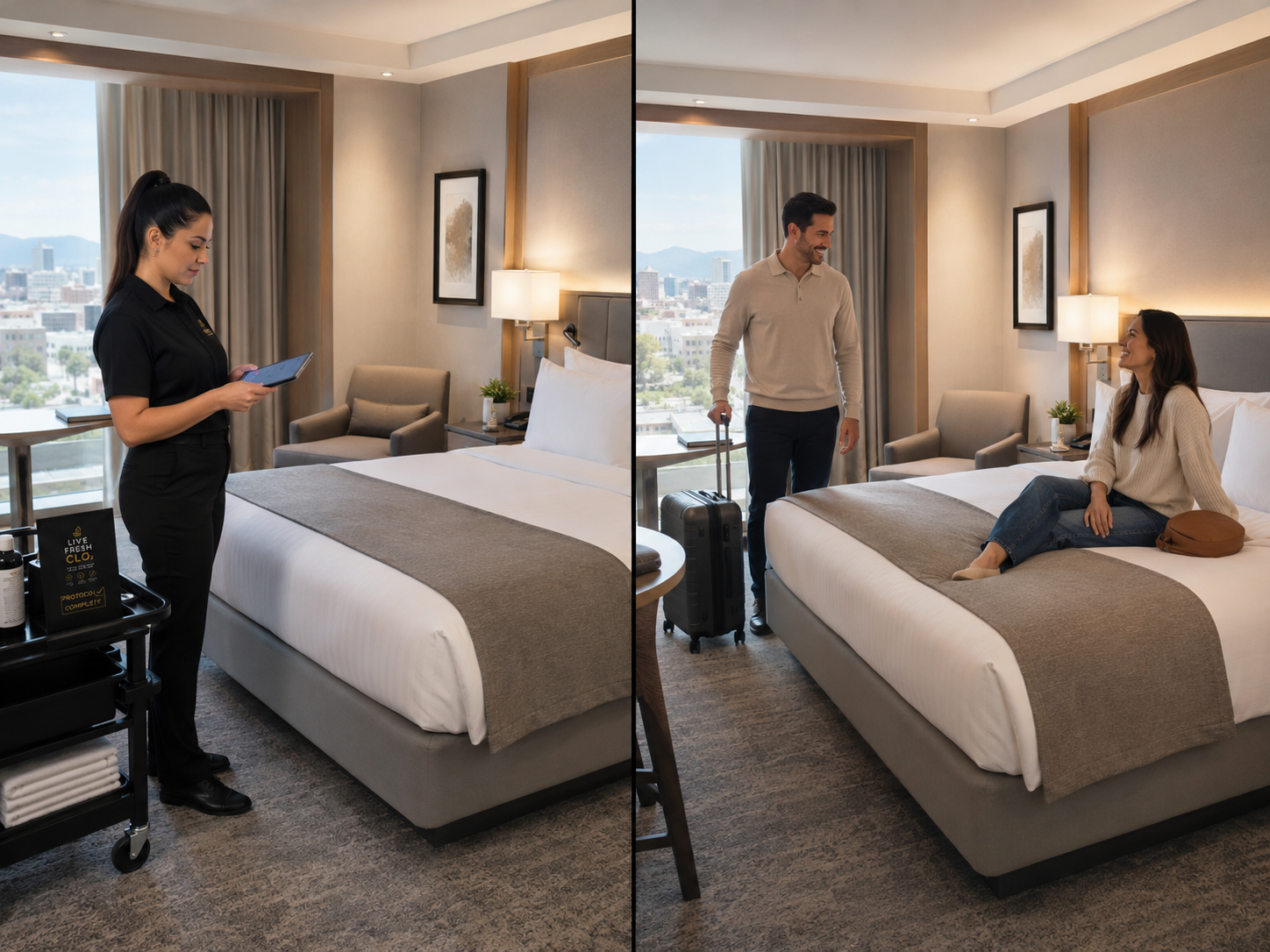
Operator-recorded outcome on the treatment record. The asset moves to customer-ready with a clean paper trail.
Recovery vs. alternatives
Why masking, ozone, and re-detail keep falling short.
Hover any mark to see the specific failure mode in operator language.
Operator-grade
UsLive Fresh CLO₂
One protocol. Five wins. Documented every time.
Acts at the odor source
Permeates the porous substrates where odor lives.
Designed for sealed-cabin treatment with ventilation before re-entry
Sealed-cabin protocol with ventilation steps before re-entry.
Fits inside an existing turnover window
Treat at least 3 hours, overnight recommended; then ventilate at least 30 minutes before re-entry.
Repeatable, documented operator SOP
A written procedure and a treatment record the team completes the same way every time.
No added fragrance / no masking
No perfume payload. Neutral cabin once ventilated.
No electricity required
Operator activates the kit by hand — no generator, no outlet, no machine.
The alternative
ThemMasking spray
Fragrance over the problem.
Acts at the odor source
Fragrance sits on top of the odor and re-blooms when it dissipates.
Designed for sealed-cabin treatment with ventilation before re-entry
Solvent overspray in a closed cabin without clear re-entry guidance.
Repeatable, documented operator SOP
Application varies by who's holding the can.
No added fragrance / no masking
Adds a fragrance layer that customers smell first — and through.
The alternative
ThemOzone cycle
Right chemistry, wrong workflow.
Designed for sealed-cabin treatment with ventilation before re-entry
Requires full evacuation and re-entry timing per ozone protocol.
Fits inside an existing turnover window
Multi-hour cycles plus evacuation push past the turnover window.
Repeatable, documented operator SOP
Outcome depends on operator estimate of run time and cabin volume.
No electricity required
Ozone generators require electricity and a dedicated machine on every cycle.
The alternative
ThemFull re-detail
Cleans what's visible — not what's embedded.
Acts at the odor source
Wipes and shampoos clean what's visible; not what's embedded.
Fits inside an existing turnover window
Full re-detail consumes the bay for a half-day or more.
Repeatable, documented operator SOP
Detail shops have SOPs, but no documented odor protocol step.
No added fragrance / no masking
Many detail products carry fragrance load by default.
No electricity required
Shop tools and machines are powered; not the odor step itself.
Use as directed · Ventilate according to instructions
Safety & ventilation
Treat it like a professional workflow — because it is one.
Operator notice · LF-SOP-001
Live Fresh CLO₂ is intended for use by operators. Always follow the kit’s printed protocol, including treatment area, dwell time, and the ventilation step before any person re-enters the vehicle or enclosed space.
Live Fresh does not make claims of disinfection, sterilization, mold elimination, or surface safety beyond what’s documented in the included protocol.
Live Fresh is a deodorizer. It is not a disinfectant or sanitizer and is not an EPA-registered pesticide.


Live Fresh · Gas Release Odor Eliminator
LF52 Gas Release Kit
- Eliminate odor at the source — no masking.
- Operator-executable protocol, repeatable result.
- Gas-phase treatment: no liquid is applied to leather, fabric, headliner, or electronics.
Fits: SUVs, trucks, mid-size cabins
Kit size
Pack size
· 10 × CLO₂ gas-release sachets (52 Gram)
· Application tray
· Operator instruction card (5-step protocol)
· Treatment safety placards
Ships from US
Secure checkout
30-day promise
Operator support
Live Fresh CLO₂
One protocol. Every vertical.
The same five steps in a recon bay, a turnover window, an STR suite, or a marine cabin. Sized to the asset. Run the same way every time.
Use as directed · Ventilate according to instructions · No fragrance masking · Made in USA with imported materials